
New Athletic Heat Requirements in Texas Result in Surge of Indoor Athletic Facilities
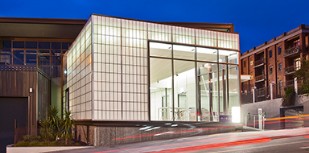
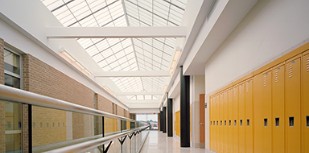
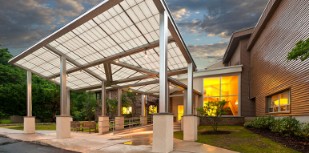
Designing large athletic facilities in hot climates presents a unique challenge: how do you create bright, comfortable indoor spaces while helping control solar heat gain and reducing reliance on artificial lighting? Kalwall® translucent daylighting systems offer architects a solution by combining highly diffuse natural daylight with an insulated, high-performance building envelope—an especially valuable combination for large, climate-controlled facilities in places like Texas.
And for Texas schools, that design challenge has taken on new importance.
Beginning with the 2026–27 school year, new mandatory heat-safety requirements from the University Interscholastic League (UIL) are putting greater emphasis on how schools manage athletic practices during extreme heat—and highlighting the value of climate-controlled indoor training facilities.
Effective August 1, 2026, UIL requires member schools to use Wet Bulb Globe Temperature (WBGT) to monitor conditions during outdoor athletic and marching band activities. Unlike air temperature alone, WBGT considers temperature, humidity, wind and solar radiation to provide a more accurate measurement of environmental heat stress.
As WBGT rises, schools must take progressively stronger precautions, including additional hydration and rest periods, equipment restrictions, reduced practice durations and limitations on conditioning. At the highest levels, outdoor activity must stop.
What the UIL Heat Guidelines Mean for Practice
Texas schools fall into one of two WBGT classifications based on regional climate conditions. Class 2 generally applies to hotter, drier areas of Texas, while Class 3 generally applies to hotter, more humid areas. Because humidity affects heat stress and WBGT readings, the classifications use different thresholds for modifying or stopping activities.
| WBGT Zone | Class 2 | Class 3 | Practice Restrictions |
| Green | Below 79.7°F | Below 82.0°F | Normal activities with regular hydration |
| Yellow | 79.7–84.6°F | 82.0–86.9°F | Increased rest and hydration; rapid cooling zone required |
| Orange | 84.7–87.6°F | 87.0–90.0°F | Practice time and equipment restrictions apply |
| Red | 87.7–89.6°F | 90.1–92.0°F | Significant restrictions; maximum practice duration reduced |
| Black | 89.7°F+ | 92.1°F+ | Outdoor practice must be terminated |
Source: University Interscholastic League 2026–27 Heat Stress & Athletic Participation Required Plan. Exact activity, equipment, rest and practice-duration requirements vary by zone.
Schools must take a WBGT reading within 15 minutes before outdoor activity begins and every 30 minutes throughout the practice or workout. If conditions move into a more restrictive WBGT level, appropriate modifications must be made according to the UIL guidelines.
While the mandate does not require schools to construct indoor practice facilities, it adds another compelling reason for Texas districts to consider climate-controlled indoor training environments.
Importantly, simply putting a roof over a practice field may not eliminate the issue. UIL requires WBGT monitoring at outdoor practices, including covered pavilions, as well as indoor facilities that are not climate controlled.
Braswell High School Shows What’s Possible
Braswell High School in Denton ISD provides an excellent example of how schools can create a high-performance indoor training environment designed for the Texas climate.
Its indoor practice facility gives student-athletes a protected, temperature-controlled space while incorporating Kalwall translucent systems to bring abundant natural daylight into the expansive interior.
Rather than creating a large, opaque metal building dependent entirely on electric lighting during the day, Kalwall’s translucent panels distribute soft, diffuse daylight throughout the training space.
That’s especially valuable in athletic environments. Large areas of transparent glazing can introduce direct sunlight, glare, hot spots and harsh shadows. Kalwall diffuses incoming daylight, helping create more balanced illumination with reduced glare and contrast while providing the thermal performance needed for a climate-controlled building envelope.
While Braswell’s facility was planned before the new UIL requirements became mandatory, it demonstrates the type of indoor training environment that could become increasingly valuable to Texas school districts.
Video courtesy of Read Architectural Products and Kakow Company
A Better Building Envelope for Hot Climates
Moving athletes indoors solves one challenge, but it raises another: How do you daylight and condition such an enormous space efficiently in the Texas heat?
That’s where Kalwall offers a distinct advantage.
Kalwall’s translucent sandwich panel technology combines daylighting and thermal performance into one integrated building system. Systems can be incorporated into walls, façades, clerestories, skylights and other configurations, allowing architects to introduce significant amounts of natural light without relying on large expanses of conventional glass.
For large indoor athletic facilities, the result is an opportunity to create a building envelope that addresses multiple design priorities at once: daylight, glare control, thermal performance and occupant comfort.
The new UIL requirements are first and foremost about protecting students from heat-related illness. But they may also influence how Texas districts think about future athletic facilities.
As schools invest in spaces that allow athletes to train safely and consistently regardless of outdoor conditions, those facilities don’t have to be dark, windowless boxes.
With Kalwall, indoor practice facilities can be bright, comfortable, high-performance training environments designed to meet the demands of hot climates.